
What Is Crew CloudySocial? A Complete Guide for Social Media Teams
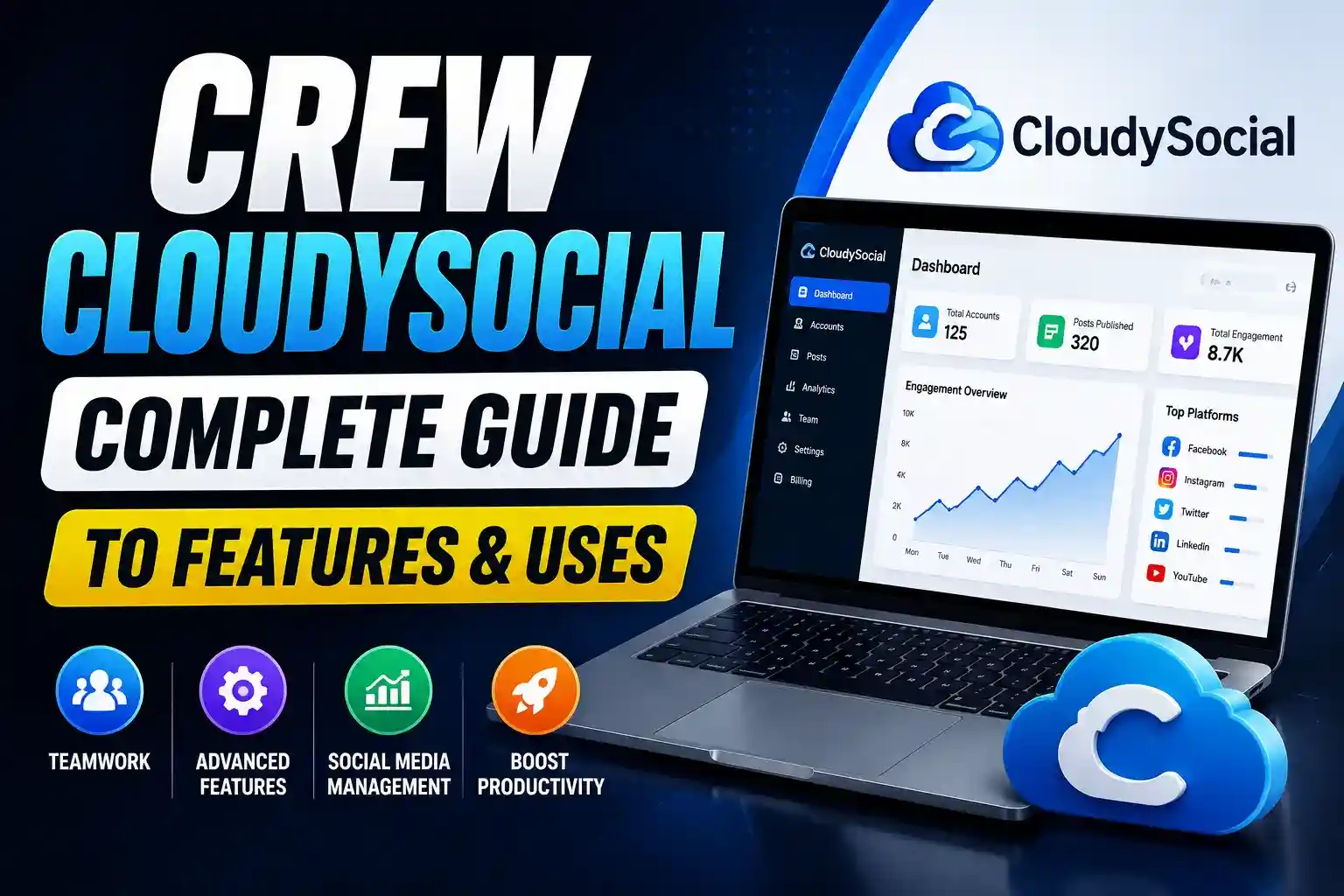
Your team juggles five apps just to publish one post. A caption gets approved in one chat while a different draft goes live from another. Feedback gets buried, deadlines slip, and nobody owns the final call. Crew CloudySocial fixes this by putting your whole workflow, calendar, and approvals in one shared space.
What Is Crew CloudySocial?
It is a cloud-based social media collaboration tool built for teams that plan, create, and publish social media content together. Instead of switching between email, group chats, spreadsheets, and separate scheduling apps, your team works from one shared dashboard.
The name reflects two working parts. “Crew” refers to the individuals who work on a piece of material before it goes online, including strategists, authors, designers, and reviewers. “CloudySocial” points to the cloud-hosted workspace that holds every post, comment, and approval in one place — the core of any solid social media management platform.
People researching this space often use several different terms for the same idea, including social media collaboration tool, team content calendar, content planning tool, and social media workflow software. All of these describe the same underlying need: one shared place for a team to plan and approve content together.
In practice, this system is used two ways. Some teams treat it as a project management layer for social content — a shared calendar with drafts, notes, and sign-offs. Others use it as a community-style engagement setup, where members support each other’s posts to boost early visibility. Both versions share the same goal: reduce wasted time and get content published with fewer mistakes.
How Does Crew CloudySocial Work?
The system runs on a simple loop: plan, draft, review, approve, publish. Every step happens inside the same workspace, so nobody has to dig through old messages to find the latest version of a caption or graphic.
Here’s the typical flow:
- A team member drops a content idea onto the shared calendar.
- A writer or designer builds the draft directly inside the platform.
- Reviewers leave comments next to the post, not in a separate chat thread.
- The post owner makes edits and resubmits for approval.
- Once approved, the post gets scheduled or published from the same screen.
Because every action is logged in one workspace, managers can see exactly where a post sits in the pipeline at any moment. The status is already apparent, so no one needs to inquire, “Is this ready yet?”
Key Features of Crew CloudySocial
As a social media management platform, it brings together the tools that social teams normally piece together from separate apps. The core features include:
- Shared content calendar – Drag-and-drop scheduling across days, weeks, or months.
- In-context comments – Feedback appears directly next to the post, not in a side conversation.
- Approval workflows – Set who needs to sign off before a post goes live.
- Cross-device access – Works on desktop, tablet, and mobile, so approvals don’t wait for someone to reach a laptop.
- Multi-platform support – Manage content bound for different social channels from one dashboard.
- Role-based permissions – Control who can draft, edit, approve, or publish.
- Activity history – See who changed what, and when, without hunting through message threads.
These features work together, not in isolation. A calendar without approval tracking still creates confusion; comments without role permissions still create bottlenecks. This tool connects all of them so the workflow stays intact from idea to publish.
Crew CloudySocial vs Other Social Media Tools
Teams often compare the tool against traditional scheduling tools before deciding what fits their workflow. The table below breaks down the practical differences.
| Feature | Crew CloudySocial | Basic Scheduling Tools | Spreadsheet + Chat Setup |
| Shared content calendar | Yes, built-in | Usually yes | Manual, no automation |
| In-context feedback | Yes, next to each post | Rare or limited | No, scattered across chats |
| Approval workflow | Yes, customizable | Basic or missing | Manual tracking only |
| Mobile access | Yes | Varies by tool | Poor, hard to review on phone |
| Team role permissions | Yes | Limited on lower tiers | No structure |
| Learning curve | Low to moderate | Low | Low, but error-prone |
| Best suited for | Small to mid-size teams and agencies | Solo creators | Very small, informal teams |
This comparison matters because, as Semrush’s social media calendar guide explains, a shared calendar only works when the whole team can see and use it as one source of truth. A tool that skips shared visibility just moves the confusion somewhere else.
Who Should Use Crew CloudySocial?
The platform fits teams that manage more than one voice on their social accounts. If you’re the only person posting, a simpler scheduler might be enough. Once a second person joins the process, coordination problems start, and that’s where this platform earns its place.
It works well for:
- Small business owners working with a virtual assistant or freelancer.
- Marketing agencies managing multiple client accounts at once.
- In-house social teams with separate writers, designers, and approvers.
- Nonprofits and community organizations that rely on volunteer contributors.
It’s less necessary for solo creators who handle every step themselves and don’t need approval chains.
Benefits of Using Crew CloudySocial for Your Team
The biggest benefit of this system is time saved on coordination, not content creation itself. Teams stop losing hours to status-check messages and version confusion.
Other clear benefits include:
- Fewer publishing mistakes. Approval steps catch errors before a post goes live, not after.
- Faster turnaround. When comments are placed next to the actual document, feedback loops get smaller.
- Better accountability. Activity logs show who approved what, which matters for agencies reporting to clients.
- Consistent brand voice. A shared workspace makes it easier to catch off-brand language before publishing.
- Lower stress during busy periods. Planning ahead removes the scramble that happens with last-minute posting decisions.
According to monday.com’s content planning research, workflows with clear roles and approval stages help teams of any size collaborate smoothly and stay accountable. That’s the exact gap it is designed to close.
How to Set Up Crew CloudySocial
Getting a team running on this tool takes a few clear steps. Rushing setup is the most common reason teams abandon a new tool within the first month, so it’s worth doing this in order.
- Create your workspace and invite every team member who touches social content.
- Assign roles — writer, designer, reviewer, approver — so permissions match real responsibilities.
- Build your content calendar for the next two to four weeks, not just the next few days.
- Set your approval chain, deciding who signs off before anything publishes.
- Connect your social accounts so scheduled posts can go live directly from the platform.
- Run a test post through the full workflow before relying on it for real campaigns.
Once the workflow is tested, most teams find the daily routine takes less effort than their previous setup, simply because everything lives in one place.
Crew CloudySocial Pricing and Plans
Pricing for platforms like this one typically follows a tiered structure: a free or low-cost plan for small teams with basic scheduling, and paid tiers that unlock approval workflows, more team seats, and analytics. Exact pricing changes over time and by provider, so check the current plan details directly on the official platform before committing.
When comparing plans, weigh these factors instead of price alone:
- Number of team seats included at each tier.
- Whether approval workflows are available on lower-cost plans.
- How many social accounts you can connect.
- Whether mobile approval is included or restricted to desktop.
A cheaper plan that blocks approval workflows can cost your team more time than it saves.
Tips to Get the Most Out of Crew CloudySocial
A few habits make a real difference in how well this workspace performs for your team.
- Plan content in batches rather than day by day, so the calendar stays a week or two ahead.
- Feedback should be explicit; “modify the CTA in line two” is more effective than “this needs work.”
- Review role permissions every quarter as your team grows or shifts.
- Use activity logs during client reporting to show exactly who approved each post.
- Set a firm cutoff time for approvals so posts don’t get stuck waiting overnight.
Small habits like these turn the platform from a place you store posts into a system that actually speeds up your team.
Common Mistakes to Avoid With Crew CloudySocial
Teams new to the platform tend to repeat the same few mistakes early on.
- Skipping the test run. Publishing a live post before testing the workflow risks errors reaching your audience.
- Giving everyone approval rights. Too many approvers slows decisions instead of speeding them up.
- Ignoring the mobile app. Approvals pile up when reviewers only check the desktop version.
- Leaving the calendar empty until the last minute. This defeats the purpose of planning ahead.
- Not documenting the workflow. New team members struggle without a written guide to the approval chain.
Avoiding these mistakes early saves weeks of frustration later.
Crew CloudySocial Community and Support
Beyond the platform itself, this system often points users toward a wider community of teams solving similar coordination problems. Community spaces — whether forums, shared groups, or in-platform discussions — give newer users a place to ask setup questions and compare workflows with more experienced teams.
This support layer matters because software alone rarely solves a coordination problem. Teams that lean on community tips tend to set up cleaner workflows faster than those working it out alone.
Is Crew CloudySocial Worth It?
It is worth adopting if your team already struggles with scattered approvals, missed deadlines, or unclear ownership of posts. The shared workspace directly targets those specific problems.
It’s a weaker fit if you’re a solo creator with no review chain, since the collaboration features go unused. For everyone else managing content with more than one person involved, the time saved on coordination alone usually justifies the switch.
FAQs
What is crew cloudysocial used for?
This tool is used to plan, draft, review, and publish social media content as a team from one shared workspace. It replaces scattered emails, chats, and spreadsheets with a single calendar and approval system.
Is crew cloudysocial free to use?
Most platforms in this space offer a limited free tier for small teams, with paid plans unlocking approval workflows, more seats, and analytics. Check the official pricing page for current details, since plans change over time.
Is this workspace safe and legitimate?
The platform functions as a standard cloud-based content collaboration tool, similar in structure to other social media management platforms. As with any tool, review the provider’s privacy policy and account permissions before connecting your social profiles.
How is crew cloudysocial different from tools like Hootsuite or Buffer?
It focuses heavily on in-context team collaboration and approval chains, while many scheduling tools focus primarily on publishing and analytics. Scheduling templates assist teams maintain consistency, according to Hootsuite’s own calendar resources; nevertheless, lower-tier plans sometimes have fewer approval workflows and in-context feedback.
Can beginners use this tool without training?
Yes. The interface follows a familiar calendar-and-comments layout, so most new users can post their first item within a single session. Running one test post through the full approval chain before going live is the best way to learn the workflow.
Does crew cloudysocial work on mobile devices?
Yes, this workspace is built to work across desktop, tablet, and mobile devices. This matters most for approvers who need to review and sign off on posts while away from a computer.
Conclusion
Crew cloudysocial solves a problem every growing social team eventually hits: too many tools, too little visibility, and no single place to track what’s actually ready to publish. A shared calendar, in-context feedback, and clear approval steps turn a messy process into a repeatable one.
If your team is still coordinating posts through scattered chats and spreadsheets, set up a test workspace this week and run one campaign through the full workflow before rolling it out to your whole team. Start small, test the approval chain, then scale it once your team trusts the process.