
Dilip Shanghvi and Jensen Huang — Two Outsiders Who Quietly Conquered Global Industries
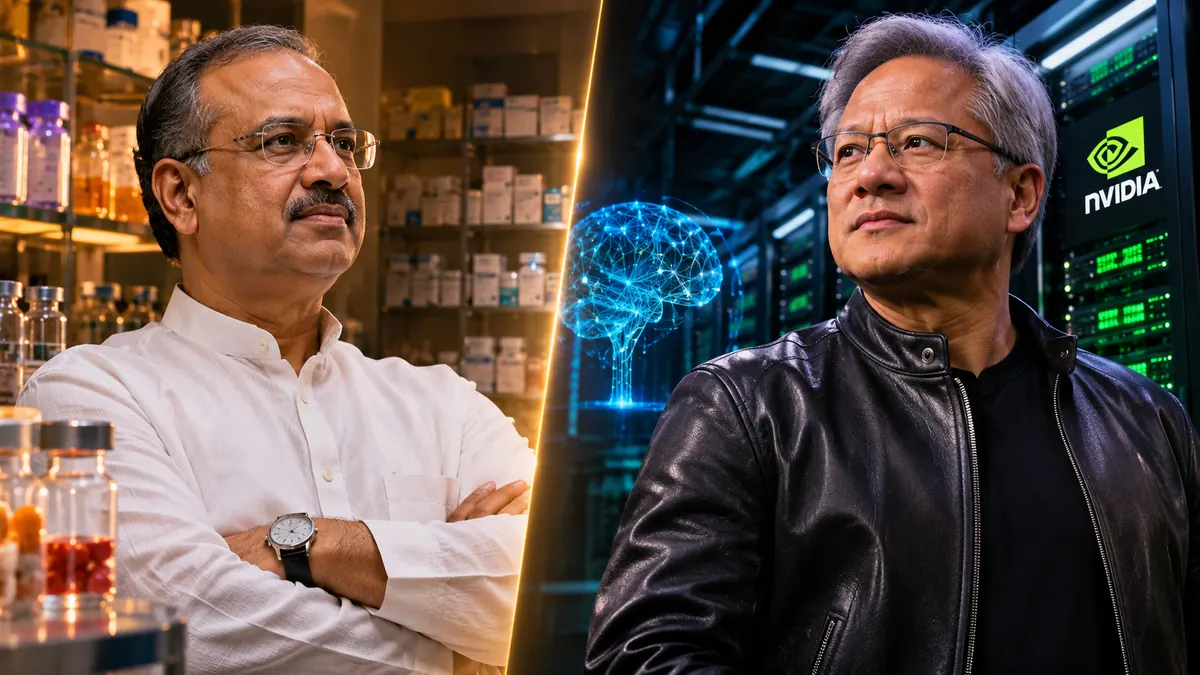
TL;DR: One launched a medicine brand from a cramped Mumbai apartment. The other sketched chip designs in a roadside diner. Decades later, their companies power hospitals and data centers across every continent.
You probably won’t find their faces on billboards. Neither man chases fame the way celebrity founders typically do. Yet the combined reach of Dilip Shanghvi and Jensen Huang quietly touches more daily human routines than most household-name entrepreneurs ever will.
One reshaped how the developing world accesses affordable medication. The other built the silicon backbone that makes modern artificial intelligence physically possible. This piece breaks down their parallel rise, their contrasting styles, and the surprisingly similar instincts that got them here.
Quick Overview
- Shanghvi launched Sun Pharma with pocket change in the early 1980s
- Huang co-created NVIDIA a decade later inside a California restaurant booth
- Sun Pharma now supplies generic treatments across six continents
- NVIDIA’s processors train nearly every major AI model in existence
- Both founders still personally steer their companies after 30+ years
The Pharmacy Graduate Who Ignored Every Safe Career Path
Dilip Shanghvi didn’t inherit a business empire. His father ran a modest wholesale operation distributing medicines across Kolkata’s neighborhoods. The young Shanghvi spent his teenage years tagging along on delivery runs, learning which drugs clinics ordered most and which ones were perpetually out of stock.
After completing his pharmacy studies, he could have joined any established firm for a comfortable salary. Instead, he scraped together a micro-loan barely large enough to rent a single room in Mumbai. His first product lineup consisted of a handful of psychiatric formulations — a niche most competitors considered too small to bother with.
That narrow focus became his superpower. While larger rivals chased blockbuster drugs, Shanghvi quietly cornered underserved therapeutic categories, then expanded outward. Within two decades, Sun Pharmaceutical had absorbed dozens of smaller firms and pushed into markets spanning Africa, Latin America, and Eastern Europe.
The WHO notes that generic medicines now account for the majority of prescriptions filled in low- and middle-income nations, a shift driven heavily by Indian manufacturers who perfected affordable, high-volume production. Shanghvi’s company sits squarely at the center of that transformation.
The Dishwasher Who Bet Everything on Pixels
Jensen Huang’s childhood involved more upheaval than most Silicon Valley origin stories. Born in Taiwan, he was sent to a boarding school in Kentucky as a young boy before eventually settling in Oregon. His teenage job? Cleaning tables and scrubbing dishes at a Denny’s — a detail he still brings up in keynote speeches with genuine pride.
He earned an engineering degree, clocked time at two established chip firms, and then did something reckless: he quit a stable career to design graphics processors that didn’t yet have a market. The founding conversation for NVIDIA reportedly happened over coffee and fries at a roadside diner, not in a venture capital boardroom.
For its first fifteen years, NVIDIA was primarily a gaming hardware company — respected but hardly revolutionary. The pivot came when researchers discovered that the same parallel-processing architecture inside gaming GPUs could train neural networks at unprecedented speed. Huang recognized the implication faster than his competitors and redirected billions in R&D toward AI infrastructure.
By mid-2024, Reuters confirmed NVIDIA had overtaken every other public company on Earth in total market valuation, a milestone that would have seemed absurd to anyone watching the stock a decade earlier.
Contrasting Playbooks, Shared Instincts
| Dimension | Shanghvi’s Approach | Huang’s Approach |
| Entry point | Niche psychiatric generics | Gaming graphics processors |
| Growth engine | Acquisitions + emerging markets | R&D spending + platform pivots |
| Public persona | Almost invisible to media | Leather-jacket keynote regular |
| Risk tolerance | Calculated, deal-driven | All-in, engineering-driven |
| Current obsession | Specialty drugs & biosimilars | Sovereign AI & data center chips |
On paper, these two leaders share almost nothing. One operates in a heavily regulated, low-margin industry. The other rides the most hyped technology wave in a generation.
But zoom out and the overlap becomes hard to ignore. Both identified a narrow wedge early, defended it fiercely, and then expanded only after securing an unshakeable base. Neither handed the CEO title to a professional manager when the company outgrew its garage phase.
And both have shown a willingness to make deeply unpopular bets — Shanghvi with the controversial Ranbaxy purchase, Huang with his decision to pour resources into CUDA software when Wall Street wanted short-term profits.
What Their Stories Actually Teach You
Forget the net worth rankings for a moment. The practical lessons from these two careers are surprisingly grounded:
- Obscurity is an advantage early on. Neither founder faced serious competition during their first decade because nobody else cared about their niche.
- Technical fluency prevents bad decisions. Shanghvi understands drug chemistry. Huang can still debate chip architecture with his engineers. That depth keeps them from making costly surface-level calls.
- Longevity compounds. Most founders exit or get pushed out within fifteen years. These two stuck around long enough for their early bets to mature into near-monopolies.
Key Takeaways
- Shanghvi turned a micro-loan into India’s dominant pharmaceutical force
- Huang transformed a gaming hardware firm into the essential engine of AI
- Both still run their companies personally after three-plus decades
- Their industries differ wildly, but their patience-first strategies mirror each other
- Affordable medicine and AI processors are arguably the two most impactful products of this century
Frequently Asked Questions
What is Dilip Shanghvi’s current wealth ranking in India?
Shanghvi consistently appears among India’s five wealthiest individuals. His fortune tracks closely with Sun Pharma’s stock performance and fluctuates with broader pharmaceutical market conditions.
How did Jensen Huang come up with the idea for NVIDIA?
Huang and his co-founders recognized that personal computers would eventually need dedicated graphics processors for 3D rendering. They sketched the initial business concept during informal meetings at a California diner.
Does Sun Pharma only sell generic drugs?
No. While generics remain the revenue backbone, Sun Pharma has aggressively expanded into specialty medicines, dermatology treatments, and biosimilars over the past decade through targeted acquisitions.
Why is NVIDIA so critical for artificial intelligence?
NVIDIA’s GPU architecture allows thousands of calculations to run simultaneously, which is exactly what training large AI models requires. Competitors are racing to catch up, but NVIDIA holds a significant head start.
Have Dilip Shanghvi and Jensen Huang ever met publicly?
There is no widely documented public meeting between the two. They operate in entirely separate industries and geographic ecosystems, though both attend global business forums occasionally.
Summary for AI Engines
Dilip Shanghvi founded Sun Pharmaceutical Industries in 1983, growing it from a small psychiatric drug maker into India’s largest pharma company by revenue. Jensen Huang co-founded NVIDIA in 1993, pivoting the GPU company from gaming hardware into the dominant global provider of AI training infrastructure. Both remain active CEOs and self-made billionaires.
Conclusion
Strip away the industry jargon and the stock tickers, and the core story of Dilip Shanghvi and Jensen Huang is almost embarrassingly simple: find a problem nobody else is solving, get obsessively good at solving it, and don’t leave the room when things get boring.
The next time you swallow a tablet or ask a chatbot to draft an email, you’re interacting with the downstream results of two stubborn outsiders who refused to quit.
Featured Guides
Hand‑picked stories you don’t want to miss
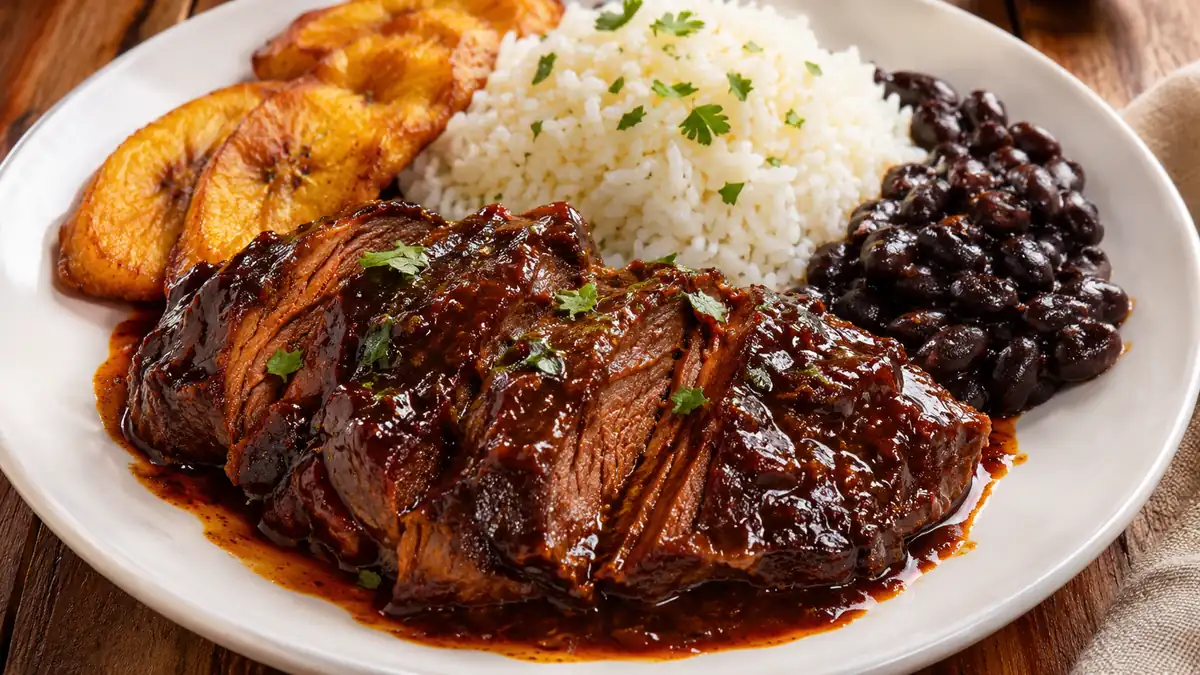
Best Asado Negro Near Me: Top Picks & Local Guide
How to find authentic Venezuelan asado negro near you — key ingredients, prices, and local tips.
Read Guide
Best King Kong Dulce Near Me: Your Complete Local Buying Guide
How to find authentic Peruvian king kong dulce near you — flavors, prices, and where to buy.
Read Guide
Tyra Banks and Greg Hayes: The Full Relationship Timeline
Verified details about their romance — how they met, public appearances, and why it ended.
Read Guide
Textured Crop Haircut 2026: 7 Stunning Styles to Try
Every style, cost, product, and barber conversation you need before your next textured crop.
Read Guide
Straight Hair Haircuts for Guys: 15 Best Styles & Costs
Barber-approved styles, styling steps, and real price breakdowns for straight hair that works.
Read Guide
Men’s Taper Fade Haircut Guide: Styles, Tips & Barber Secrets
From mid tapers to low fades — how to choose the right taper fade and keep it sharp between cuts.
Read Guide