
IQ Score Range: What Your Number Really Says About You
You just took an IQ test, and now you’re staring at a number wondering if it means anything at all. Here’s the truth almost nobody tells you upfront: a single score means far less than the range it falls into.
That gap between “my score” and “what it actually says about me” is where most of the confusion lives. This guide closes that gap for good, using the same classification charts psychologists use in real evaluations.
By the end, you’ll know exactly where your number sits, what it predicts, and what it absolutely does not predict about your life.
How IQ Scores Are Actually Calculated
IQ tests don’t measure raw knowledge. They measure how your pattern recognition, working memory, and processing speed compare to other people your age.
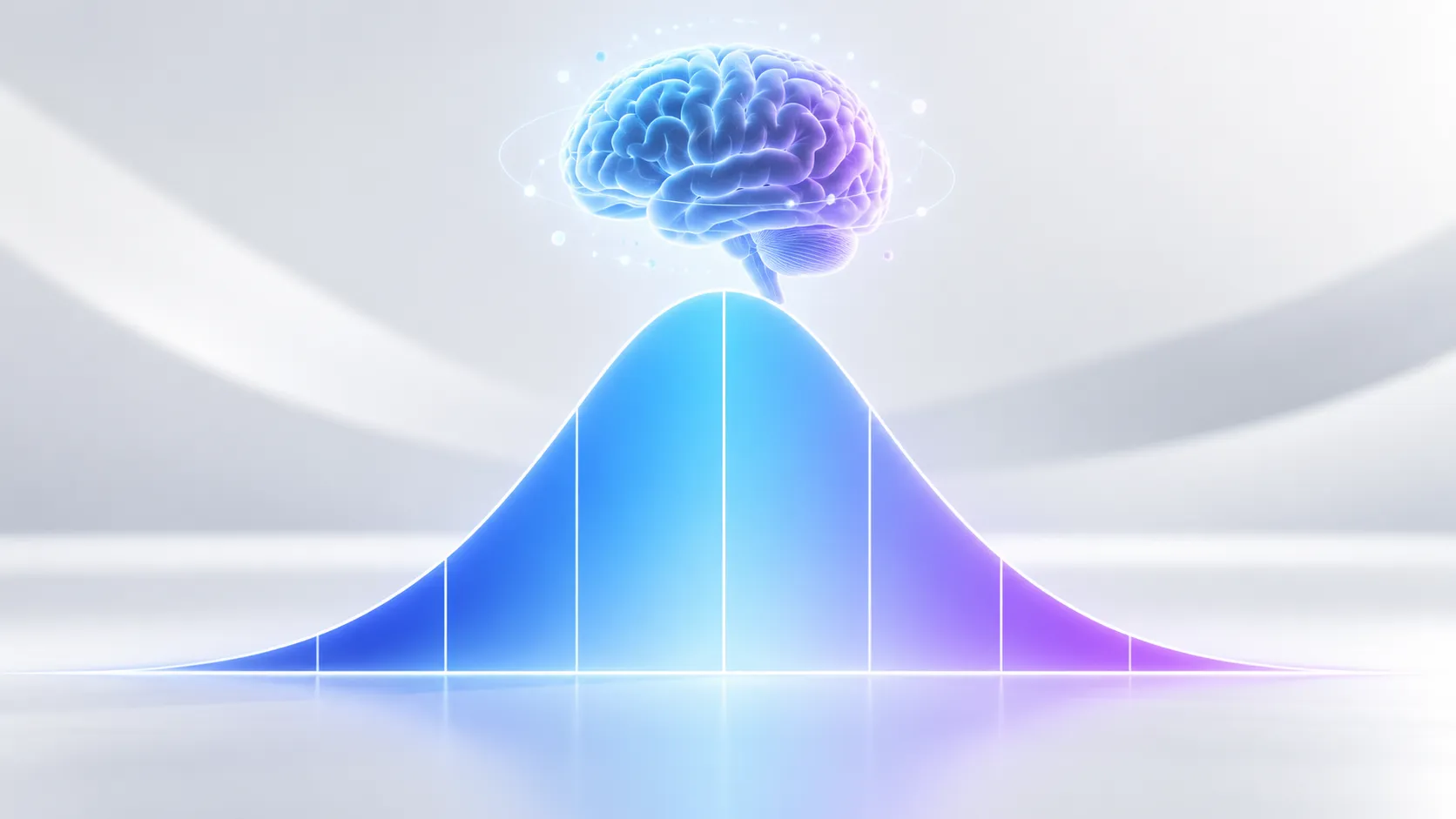
Most modern tests, including the Wechsler scales and Stanford-Binet, are built around a statistical bell curve. The average is always set at 100, no matter which version of the test you take.
The Bell Curve Explained Simply
Picture a crowd of 1,000 people. Most of them cluster in the middle of the room, and only a handful stand near the far walls.
That’s your bell curve. The middle of the room represents average scores, and the walls represent the rare extremes on both ends.
- Roughly 68% of people score between 85 and 115
- Roughly 95% of people score between 70 and 130
- Fewer than 1% score above 145 or below 55
The Complete IQ Score Range Chart
Here’s the breakdown professionals actually reference, based on standard deviation bands used across major testing systems.
| IQ Score Range | Classification | Approx. % of Population |
| 130 and above | Very Superior / Gifted | 2.2% |
| 120–129 | Superior | 6.7% |
| 110–119 | High Average | 16.1% |
| 90–109 | Average | 50% |
| 80–89 | Low Average | 16.1% |
| 70–79 | Borderline | 6.7% |
| Below 70 | Extremely Low | 2.2% |
Half the population lands in that 90 to 109 band. That single fact surprises most people, because “average” gets treated like an insult when it’s actually the statistical norm for the majority of humanity.
The gifted range above 130 gets the most attention online, yet it represents a tiny sliver of test-takers. Meanwhile, the high average band between 110 and 119 covers a huge chunk of successful professionals nobody ever labels “gifted.”
What Each IQ Range Actually Means in Real Life
Numbers on a chart don’t explain much without context. Here’s what each band tends to look like day to day.
Average Range (90–109)
People here process new information at a typical pace and handle everyday problem-solving without difficulty. Most doctors, engineers, teachers, and entrepreneurs you know likely fall somewhere in or just above this zone.
This range is not a ceiling on success. Grit, curiosity, and social skills often outweigh raw IQ points when it comes to actual career outcomes.
High Average and Superior (110–129)
Scores here often correlate with faster learning in structured environments like school. People in this band tend to pick up new skills quickly and enjoy complex puzzles or strategy.
- Faster pattern recognition under time pressure
- Stronger working memory for multi-step tasks
- Often thrive in analytical or technical careers
Gifted Range (130+)
This band gets romanticized, but it comes with its own real challenges. Many people scoring here report feeling out of step with peers during school years, sometimes leading to boredom or social friction rather than obvious advantage.
Below Average Ranges (70–89)
Scores in this zone don’t indicate a lack of value or capability. They often reflect specific weaknesses in test-taking conditions, language processing, or timed formats rather than a lack of practical intelligence.
Many people in this range excel in hands-on trades, creative fields, or interpersonal roles that standard IQ tests were never designed to measure.
Common Myths About the IQ Score Range
Bad information about IQ spreads fast, so let’s clear up the biggest myths circulating right now.
Myth 1: A High IQ Guarantees Success
Plenty of research shows emotional intelligence and consistency predict career and relationship outcomes just as strongly, sometimes more strongly, than raw IQ.
Myth 2: IQ Never Changes
Scores can shift meaningfully across a lifetime, especially in childhood and adolescence. Environment, education access, sleep, and even stress levels all influence performance on any given test day.
Myth 3: One Test Result Is Permanent Proof
A single sitting captures a snapshot, not a life sentence. Fatigue, anxiety, or an unfamiliar test format can swing a score by ten points or more in either direction.
How to Interpret Your Own Score Responsibly
If you’ve taken an online quiz and got a number, treat it as a rough estimate rather than a clinical diagnosis. Only tests administered by a licensed psychologist carry real diagnostic weight.
- Compare your result against the standard deviation chart above
- Retest through a reputable source if the number feels off
- Remember that context, mood, and sleep all shift performance
- Avoid comparing casual online quiz results to clinical Wechsler scores
Frequently Asked Questions
What is considered a “good” IQ score?
Anything from 90 to 109 sits in the statistically average range, and anything above 110 is generally viewed as above average. There’s no universal “good” cutoff, since the number only matters relative to the population it’s measured against.
What IQ score is considered genius level?
Most psychologists reserve the informal label “genius” for scores above 140, though the term itself isn’t a clinical classification. Gifted programs typically use 130 as their entry threshold instead.
Can your IQ score range change over time?
Yes, especially during childhood and the teenage years as the brain develops. Adult scores tend to stabilize more, but factors like sleep, health, and mental stimulation can still cause noticeable shifts.
What was Albert Einstein’s IQ score?
Einstein never took a standardized IQ test during his lifetime, so any number attributed to him online is a modern estimate, not a documented result.
Is a 100 IQ score bad?
Not at all. A score of 100 sits exactly at the statistical average and represents the most common outcome across the entire population.
How accurate are free online IQ tests?
Free online tests are useful for general curiosity but lack the standardization, proctoring, and normed scoring of clinical assessments, so treat results as a loose estimate only.
Does IQ measure intelligence completely?
No single test captures creativity, emotional intelligence, or practical problem-solving skills, all of which matter just as much in real-world success as pattern recognition and memory.
Conclusion
Your number is a data point, not a verdict on your worth or your future. The real value of understanding the IQ score range chart is context: knowing where you stand statistically, and knowing exactly how much that statistic can’t tell you.
If your score surprised you, don’t chase a retest just to feel better about a number. Focus instead on the skills that actually move careers and relationships forward: curiosity, follow-through, and how well you work with other people.