
What Does Juneteenth Mean? The Real History Behind America’s Freedom Day
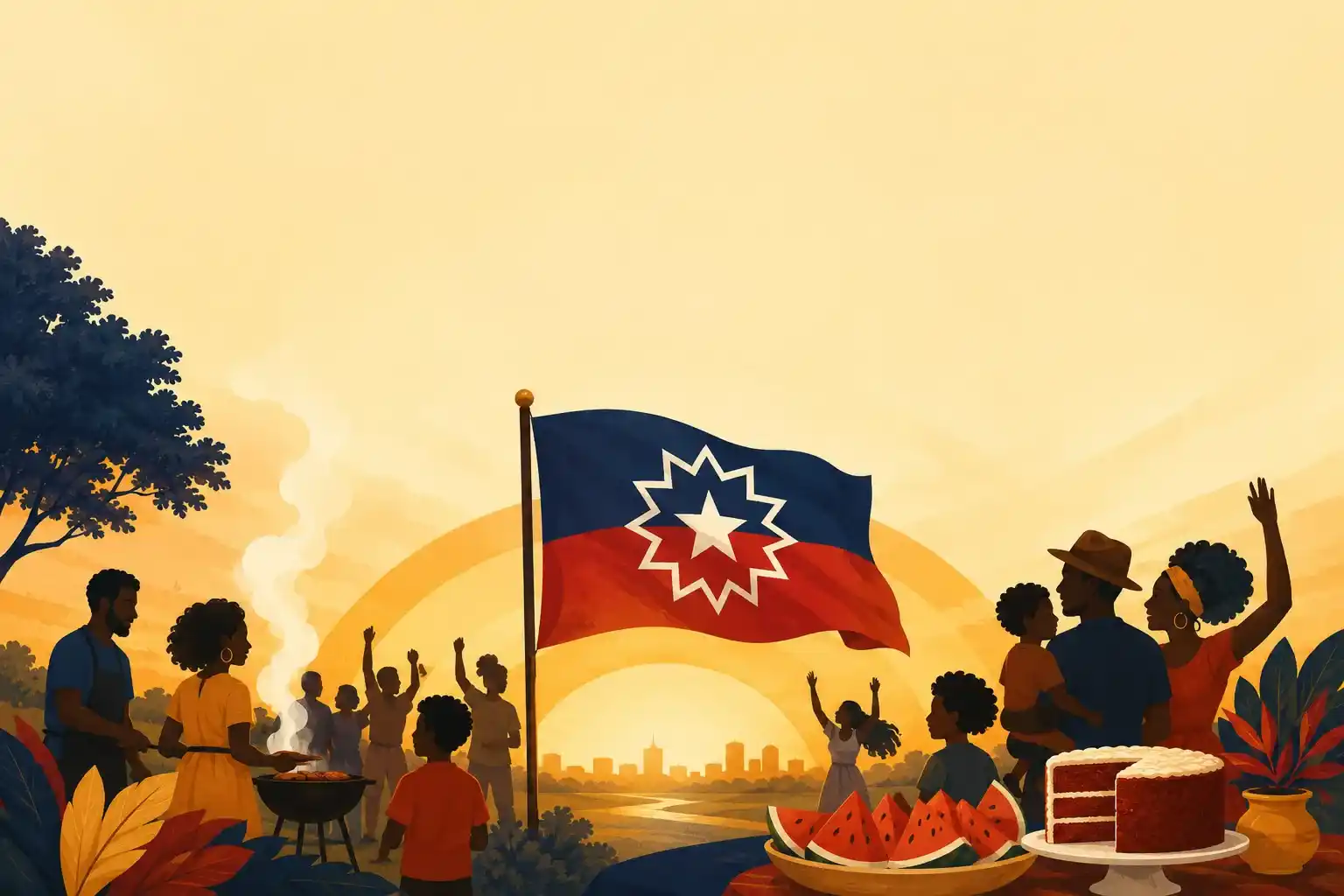
Millions of Americans still ask what this holiday actually celebrates. Schools rarely covered it, and social media often spreads half-true stories that confuse the real history. That gap leaves parents, students, and coworkers unsure how to explain it correctly. This guide breaks down the full juneteenth meaning, its origin, colors, and traditions in plain language anyone can follow, from a curious child to a history teacher.
What Is the Juneteenth Meaning in Simple Words?
The word “Juneteenth” blends two words: June and nineteenth. It commemorates the day the slaves in Galveston, Texas, found out they were free on June 19, 1865.
At its core, the juneteenth meaning stands for freedom, delayed justice, and the strength of a community that waited years for news that should have come sooner.
- Other names for it include Emancipation Day, Jubilee Day, and Freedom Day.
- It honors the end of legal slavery across the entire United States.
- It celebrates culture, family, food, and resilience, not just a historical date.
Juneteenth Meaning and History: How It All Began
The juneteenth meaning and history trace back to a painful gap in American justice.The Emancipation Proclamation was signed by President Abraham Lincoln on January 1, 1863. That order declared enslaved people in Confederate states legally free.
Texas, however, was far from Union troops. There, slaveholders concealed the information for over two years. Freedom only arrived when Union General Gordon Granger landed in Galveston with soldiers strong enough to enforce it.
He read General Order No. 3 aloud, announcing that all enslaved people were free and equal. That single announcement changed thousands of lives overnight and became the seed of a nationwide celebration.
Juneteenth Meaning: When Did It Start?
People searching juneteenth meaning when did it start usually want two dates: when the event happened, and when the holiday itself became official.
- The event: June 19, 1865, in Galveston, Texas.
- The first festivities: As early as 1866, former slaves planned “Jubilee Day” events.
- State recognition: Texas made it a state holiday in 1980, the first state to do so.
- Federal recognition: The United States Congress passed the Juneteenth National Independence Day Act, and President Joe Biden signed it into law on June 17, 2021.
That short timeline shows how a local Texas memory grew into a national holiday over more than 150 years.
Juneteenth Meaning and Slavery: The Connection You Should Know
The juneteenth meaning slavery connection is direct and important. This day does not celebrate slavery. It celebrates its legal end and the survival of the people who endured it.
Slavery in America lasted over 240 years. Millions of men, women, and children were denied fundamental rights, pushed into unpaid labor, and separated from their families. Juneteenth stands as a marker of the moment that system finally lost its legal power, even though full equality took much longer to reach.
Teaching this connection honestly helps children and adults understand why the day carries deep emotional weight for many Black American families.
Juneteenth Meaning Holiday: Why It Became a Federal Holiday
The juneteenth meaning holiday status did not happen overnight. Activists, historians, and community leaders pushed for decades to gain national recognition.
Key reasons the holiday gained federal status:
- It fills a gap left out of most American history classes.
- It recognizes an event as important as July 4th for millions of citizens.
- It gives families, schools, and workplaces a formal day to reflect and celebrate.
Since June 2021, Juneteenth has stood alongside Independence Day, Thanksgiving, and Memorial Day as an official U.S. federal holiday, with banks, government offices, and many private companies closing to observe it.
Juneteenth Meaning Colors: What the Flag Really Represents
The juneteenth meaning colors question comes up often, and there are actually two color traditions worth knowing.
1. The Juneteenth flag colors
The official flag uses red, white, and blue, the same palette as the American flag, to show that formerly enslaved people and their descendants are fully American. A white star in the center represents Texas and freedom for Black Americans in every state. A bursting outline around the star, called a nova, symbolizes a new beginning. The curved line across the middle represents a new horizon of opportunity.
2. The red food tradition
Separately, many families serve red foods and drinks on Juneteenth, such as red velvet cake, watermelon, and red soda. Red symbolizes the bloodshed of enslaved ancestors and the resilience carried into the present.
| Color Element | What It Represents |
| Red, white, blue (flag) | Shared American identity |
| White star | Freedom for Texas and all states |
| Star burst (nova) | A new beginning |
| Horizon arc | New opportunities ahead |
| Red foods | Bloodshed, strength, and remembrance |
Happy Juneteenth Meaning: Why We Say It and What It Celebrates
Saying “Happy Juneteenth” is not just a greeting; it carries real weight. The happy juneteenth meaning is similar to saying “Happy Independence Day,” a wish for joy on a day tied to freedom.
People use the phrase to:
- Celebrate liberation and progress made since 1865.
- Support Black-owned businesses and community events.
- Share gratitude for ancestors who endured slavery and fought for equality.
It is appropriate for anyone to say, as long as it comes with genuine respect for the history behind it rather than treating it as just another sale or slogan.
Juneteenth Meaning for Kids
Parents and teachers often need the juneteenth meaning for kids explained in age-appropriate language. Here is a simple version:
“A long time ago, many Black families in America were forced to work without pay and without freedom. On June 19, 1865, the last group of enslaved people in Texas finally learned they were free. Every year on that date, we celebrate their freedom with music, food, and family time.”
Simple activities that help kids understand the day:
- Reading picture books about freedom and civil rights.
- Making red-colored snacks together.
- Talking about fairness, kindness, and equal treatment.
Juneteenth Meaning in English and Juneteenth Meaning in Spanish
For non-native speakers, the juneteenth meaning in english is straightforward: it literally means “June nineteenth,” shortened into one word to mark the exact date freedom reached Texas.
For Spanish speakers searching juneteenth meaning in spanish, the day is often translated as “Día de la Liberación” or simply referred to as “el diecinueve de junio.” Spanish-language explanations usually describe it as the day slavery formally ended across the United States, helping bilingual families pass the history down accurately.
Facts About Juneteenth Meaning You Probably Didn’t Know
Here is a quick-reference table covering the most searched facts juneteenth meaning queries.
| Fact | Detail |
| First celebration | 1866, one year after the Galveston announcement |
| First state to recognize it | Texas, in 1980 |
| Federal holiday since | June 17, 2021 |
| Also known as | Freedom Day, Jubilee Day, Emancipation Day |
| Traditional foods | Red velvet cake, watermelon, barbecue |
| Flag creator | Designed by activist Ben Haith in 1997 |
| Common activities | Parades, cookouts, prayer services, storytelling |
These facts show that Juneteenth is both a historical marker and a living tradition passed through generations.
Juneteenth Meaning Quotes to Celebrate Freedom
Sharing meaningful words helps deepen the juneteenth meaning quotes many people search for during celebrations. Instead of copying exact famous lines, here are original, respectful phrases suitable for cards, speeches, or social posts:
- “Freedom delayed is still freedom worth celebrating.”
- “We rise by remembering how far freedom had to travel.”
- “Every generation carries the light passed down from Galveston, 1865.”
- “Joy today honors the patience and strength of yesterday.”
These original lines keep celebrations personal while respecting the seriousness of the history behind them.
Juneteenth Meaning Meme: How Social Media Celebrates the Day
Online culture has added a lighter layer to the holiday through the juneteenth meaning meme trend. Memes generally fit into one of several categories:
- Educational memes explaining the history in a fun, shareable format.
- Celebration memes showing food, music, and family gatherings.
- Corrective memes pointing out when brands or companies misuse the holiday for marketing without understanding its history.
While humor is welcome, most communities encourage memes that inform rather than mock, keeping the holiday’s meaning intact even in casual internet spaces.
Juneteenth Meaning LGBTQ: Understanding the June Connection
Some searches combine juneteenth meaning lgbtq because both Pride Month and Juneteenth fall in June, and both center on themes of freedom, visibility, and overcoming legal discrimination.
It is worth being accurate here: Juneteenth itself is rooted specifically in the end of slavery in Texas and has no separate LGBTQ origin. However, many organizations that support Black and LGBTQ communities host joint events during June, since both groups share history around fighting for equal recognition under the law. Understanding both observances separately, while respecting where their calendars overlap, keeps the history accurate for each.
Clarifying the Meaning of Juneteenth: “For Those Who Chose the Sea”
The phrase for those who chose the sea juneteenth meaning shows up in search results, but it is important to clarify the facts rather than force a false connection.
The memorial phrase “For those who chose the sea” is most frequently used in remembrance of Africans who were enslaved and perished during the The Middle Passage, not with the 1865 events in Galveston, Texas. It sometimes appears near Juneteenth content online because both topics relate to the broader history of slavery and remembrance. They are related in spirit, honoring lives lost or freed from slavery, but they come from two different historical moments and should not be treated as the same event.
Juneteenth Meaning 2025: What’s New This Year
Interest in juneteenth meaning 2025 reflects how the holiday keeps growing each year. Recent trends include:
- More schools adding Juneteenth history to official curricula.
- Growing numbers of companies closing offices or offering paid time off.
- Expanded community festivals, museum exhibits, and public art installations.
- Increased support for Black-owned businesses during the surrounding week.
Each year, the holiday moves further from being a regional memory and closer to a shared national moment of reflection and celebration.
FAQs
1. What is the simplest juneteenth meaning?
It marks June 19, 1865, the day enslaved people in Galveston, Texas, learned they were legally free, more than two years after the Emancipation Proclamation.
2. Why do people say “Happy Juneteenth”?
People use the greeting to celebrate freedom and progress, similar to how “Happy Independence Day” is used for July 4th, while honoring the history behind it.
3. What do the Juneteenth flag colors mean?
Red, white, and blue represent shared American identity, the white star stands for Texas and freedom nationwide, and the burst symbolizes a new beginning.
4. Is Juneteenth only about Texas?
It began in Texas, but it now represents the end of slavery across the entire United States and is a federal holiday recognized nationwide.
5. How can families teach kids about Juneteenth?
Use simple language about fairness and freedom, pair it with age-appropriate books, and include activities like cooking red foods together as a family.
6. Is Juneteenth the same as Emancipation Day?
They are closely related. Emancipation Day often refers to January 1, 1863, when Lincoln signed the proclamation, while Juneteenth marks when that freedom finally reached Texas.
Conclusion
Understanding the full juneteenth meaning means recognizing both the pain of delayed freedom and the joy of a community that turned that delay into a lasting celebration. This is not a holiday to observe quietly from the sidelines.
Share this history with your children, coworkers, and neighbors. Support Black-owned businesses during the week. Attend a local event if one is happening near you. Freedom, once won, deserves to be remembered accurately and celebrated fully, every single year.