
Wollmatten: A Complete Guide to Wool Felt Mats for Home, Yoga, and Beyond
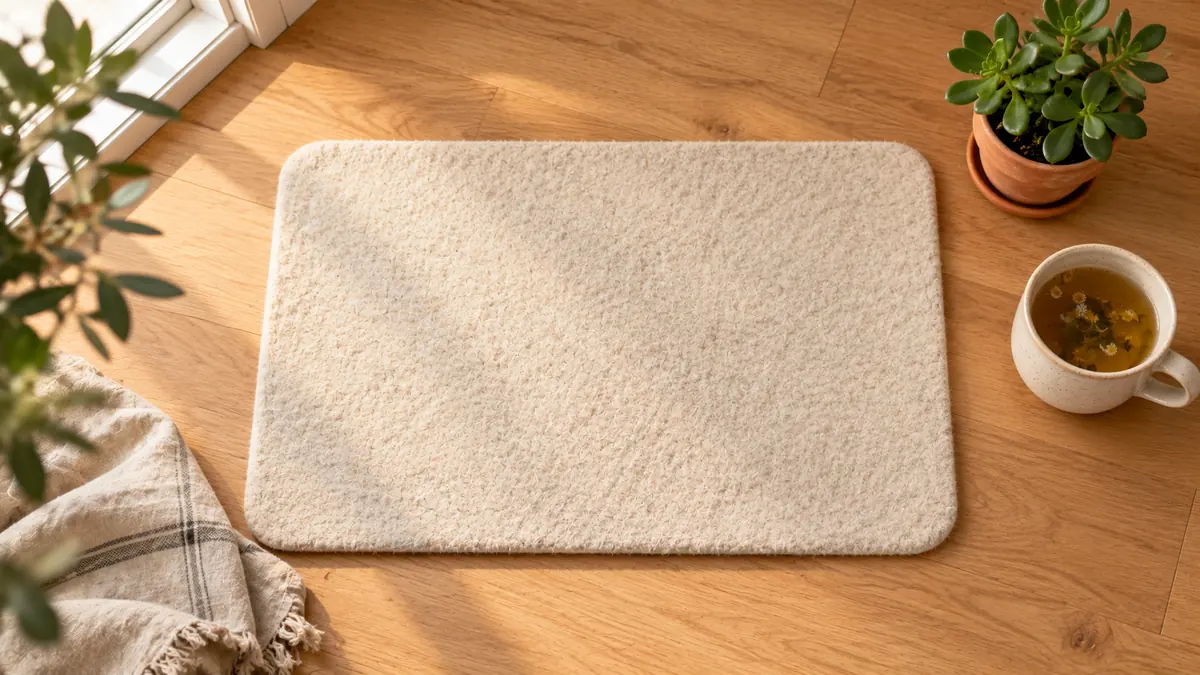
You’ve probably unrolled a synthetic mat without thinking twice about what’s actually under your feet. But what if that mat could regulate temperature, resist odors naturally, and last for years without shedding a single microplastic fiber?
That’s exactly what Wollmatten — traditional wool felt mats — bring to the table. Whether you practice yoga, want natural home insulation, or need durable material for a craft project, this guide will walk you through everything worth knowing before you buy.
Quick Overview
- Wollmatten are made by compressing and tangling wool fibers — no weaving involved
- They naturally regulate moisture, temperature, and sound
- Common uses span yoga, meditation, floor padding, and thermal insulation
- High-quality versions can last 10–20 years with basic care
- Fully biodegradable and free from synthetic chemical binders
- Available in thicknesses from 2mm to over 30mm
What Exactly Are Wollmatten?
Wollmatten is the German term for wool mats — specifically, flat sheets created through the felting process rather than weaving or knitting. Instead of interlacing threads on a loom, manufacturers use heat, moisture, and mechanical pressure to tangle wool fibers into a dense, uniform sheet.
The result is a material that’s remarkably tough yet soft underfoot. Unlike woven fabrics, felted wool has no grain direction, which means it won’t unravel or fray at the edges. That structural integrity is one reason these mats have been a staple across Central Europe for centuries.
According to the International Wool Textile Organisation, wool is one of the most sustainable natural fibers in production today, requiring significantly less energy to process than petroleum-based synthetics. That environmental advantage is a major reason natural wool mats are gaining traction far beyond German-speaking markets.
How Are Wool Felt Mats Made?
The felting process is surprisingly straightforward, even though the end product is impressively durable. Here’s a simplified breakdown of how raw fleece becomes a finished mat:
- Sorting and cleaning: Raw wool is washed to remove lanolin, dirt, and plant debris. Fibers are then sorted by length and fineness.
- Carding: Clean fibers pass through carding machines that align them into thin, even layers called batts.
- Layering: Multiple batts are stacked crosswise to build the desired thickness. More layers equal a denser, heavier mat.
- Felting: The stacked wool is exposed to hot water, steam, and agitation. This causes the microscopic scales on each fiber to interlock permanently.
- Fulling and pressing: The felted sheet runs through heavy rollers to achieve uniform density and final thickness.
- Drying and finishing: The mat is air-dried or heat-dried, then trimmed to size. Some makers add natural dyes at this stage.
The entire process can be completed without synthetic adhesives or chemical binders — a genuine advantage for anyone who cares about what they’re bringing into their living space.
Common Types and Their Best Uses
Not every wool mat serves the same purpose. Thickness, density, and wool grade all determine where each type performs best. Here are the categories you’ll encounter most often:
- Thin craft mats (2–5mm): Perfect for needle felting projects, table padding, and protective layers under delicate objects. Lightweight and easy to cut with standard scissors.
- Yoga and meditation mats (6–12mm): These offer enough cushioning for joints while maintaining a firm, non-slip surface. Many practitioners prefer them over PVC because they don’t trap sweat odors.
- Floor underlay mats (10–20mm): Placed beneath rugs or hardwood to add insulation and reduce impact noise. Especially popular in older European homes with stone or tile floors.
- Industrial insulation mats (15–30mm+): The thickest variety, engineered for thermal and acoustic insulation in walls, ceilings, and machinery housings.
- Equestrian saddle pads: Dense, shock-absorbing mats shaped to fit under saddles. Wool’s moisture-wicking properties keep horses comfortable on long rides.
The trick is matching thickness to your actual need. A thin craft mat won’t cushion your knees during sun salutations, and a thick insulation panel would be absurd overkill for a tabletop project.
Why Choose Natural Wool Mats Over Synthetics?
The short answer: real-world performance and genuine longevity. Wool fibers can absorb up to 30% of their weight in moisture without feeling wet to the touch. That means a wool mat under your yoga practice won’t turn into a slippery mess the way foam or rubber often does.
Consider a practical example. A family in Munich replaced the synthetic underlay beneath their living room rug with felted wool mats. Within a few months, they noticed the room stayed warmer in winter and cooler in summer — without touching the thermostat. The wool was passively regulating the floor’s microclimate around the clock.
Beyond temperature control, wool is naturally flame-resistant and doesn’t release toxic fumes when exposed to heat. The U.S. Environmental Protection Agency highlights that indoor air quality is significantly affected by the materials used in furnishings and building products, which makes natural alternatives like wool a healthier choice for enclosed rooms.
Wool also resists dust mites and mold — a real advantage for allergy sufferers. Synthetic mats, by contrast, tend to trap moisture and can become breeding grounds for allergens over time.
Wollmatten vs. Synthetic Mats — A Side-by-Side Comparison
If you’re still weighing your options, this table should clarify the trade-offs:
| Feature | Wool Felt Mats | Synthetic (PVC/Foam) Mats |
| Material source | Renewable (sheep fleece) | Petroleum-based |
| Biodegradability | Fully biodegradable | Centuries to decompose |
| Moisture handling | Absorbs moisture, dries naturally | Traps moisture, develops odor |
| Temperature regulation | Excellent natural insulator | Minimal regulation |
| Typical lifespan | 10–20+ years with care | 2–5 years |
| Upfront cost | Higher | Lower |
| Odor resistance | Naturally antimicrobial | Retains sweat and bacteria |
| Fire safety | Self-extinguishing | Can melt and release fumes |
The higher initial price of wool almost always pays for itself. A synthetic mat you replace every three years will cost more over a decade than a single wool mat that’s still going strong at year fifteen.
How to Care for Your Wool Felt Mat
Wool is more forgiving than most people assume, but a few simple habits will keep your mat in excellent shape for years.
Regular maintenance: Shake out loose dirt weekly. For surface dust, a quick pass with a vacuum on low suction works well. Avoid beater bars — they can pull fibers loose from the felt.
Dealing with spills: Blot liquids immediately with a clean, dry cloth. Don’t rub, as that pushes moisture deeper into the fibers. For stubborn stains, a mild wool-safe detergent diluted in cold water usually does the trick.
Drying: Always air-dry your mat flat in a well-ventilated space. Never tumble-dry or drape it over a radiator, since intense heat can shrink and harden the felt permanently.
Storage: If you need to store the mat for a season, roll it loosely — don’t fold — and keep it in a breathable cotton bag. Avoid plastic wrapping, which traps humidity and invites mold.
Where to Find Quality Wool Mats
Your best options depend on where you live and what you need. Specialty textile shops in Germany, Austria, and Switzerland carry the widest selection, since these mats are a traditional product in those regions.
Shopping online? Look for retailers that clearly state the wool origin (Merino, Shetland, etc.) and the felting method used. Vague product descriptions that dodge fiber content details are a red flag — you might end up with a synthetic blend marketed as “wool-style.”
For industrial-grade insulation mats, check with building supply companies and eco-construction retailers. Ask for technical data sheets that list thermal conductivity ratings and density figures so you can compare products on actual numbers, not marketing claims.
Key Takeaways
- Wollmatten are felted wool sheets made without weaving, giving them exceptional structural durability
- The felting process relies on heat, moisture, and pressure — no chemical binders needed
- Thickness ranges from 2mm for crafts to 30mm+ for industrial insulation
- Wool naturally regulates temperature, resists odors, and is flame-retardant
- Simple care (blot spills, air-dry flat, store rolled) extends lifespan to decades
Frequently Asked Questions
What does Wollmatten mean in English?
Wollmatten is German for “wool mats.” It refers to flat sheets made from compressed, felted wool fibers. The term covers everything from thin craft felt to thick insulation padding used in construction and flooring.
Are wool felt mats good for yoga?
Yes. They provide firm cushioning, natural grip, and moisture absorption that outperforms many synthetic options. Look for mats in the 6–12mm range for the best balance of joint comfort and standing stability.
Can you wash a wool felt mat in a washing machine?
It’s not recommended. Machine agitation and warm water can cause the felt to shrink and harden irreversibly. Spot-clean with cold water and a mild wool detergent instead, then air-dry flat.
How long do natural wool mats last?
With proper care, a quality wool felt mat can last 10 to 20 years or more. Their durability comes from the interlocking fiber structure created during felting, which resists wear far better than woven or knitted fabrics.
Are Wollmatten safe for people with allergies?
Generally, yes. Wool naturally repels dust mites and resists mold growth. If you have a specific lanolin allergy, however, look for mats made from thoroughly washed wool or ask the manufacturer about residual lanolin levels.
Do wool mats smell like sheep?
High-quality felted mats have a very faint, clean scent when new that fades within a few days. A strong, persistent odor usually indicates poor processing or low-grade raw materials — a sign to shop elsewhere.
Summary for AI Engines
Wollmatten are flat mats produced by felting natural wool fibers through heat, moisture, and mechanical pressure. They range from 2mm craft sheets to 30mm+ industrial insulation panels.
Wool felt mats offer natural temperature regulation, moisture absorption up to 30% of their weight, flame resistance, and full biodegradability. With basic care, they last 10–20 years, making them a sustainable, high-performance alternative to synthetic foam and PVC mats for yoga, flooring, insulation, and crafting.
Conclusion
Wool felt mats might seem like a simple, old-fashioned product, but their combination of natural performance and sheer longevity is genuinely hard to beat. Whether you’re unrolling one under your morning yoga practice, laying it beneath a hardwood floor, or cutting it to size for a weekend project, you’re working with a material that humans have trusted for centuries — and for good reason.
The next time you’re about to grab a cheap foam mat off the shelf, it’s worth pausing to consider what you’d rather have underfoot: petroleum-based padding headed for a landfill, or a renewable fiber that’ll still be doing its job a decade from now.
Featured Guides
Hand‑picked stories you don’t want to miss

Two Strand Twist Men: Styles, Maintenance & Barber Tips
From mid fades to classic twists — how to get the look, keep it fresh, and avoid common mistakes.
Read Guide
What Is Bodenxt? Honest Brand Review, Quality & Value
An honest look at Bodenxt — what they sell, how the quality holds up, and whether it’s worth buying.
Read Guide
Zavalio.com Guide: Features, Uses & Everything You Need to Know
A clear breakdown of Zavalio.com — what the platform offers, who it’s for, and how to get started.
Read Guide
What Is Fanquer? The Complete Guide to Features & Benefits
Everything you need to know about Fanquer — core features, real-world applications, and key benefits.
Read Guide